

Huntsville's Housing Boom Is Shifting Toward Single-Family Construction
Huntsville's growth over the past three years has followed a clear pattern: a wave of apartment and multi-family construction in 2023 and 2024, followed by a resurgence in single-family homebuilding. The city's 2025 Development Review confirms the shift — the Planning Commission approved 1,892 single-family lots last year, the most since 2007, and nearly double the long-term annual average going back to 1983. City officials expect those approvals to translate into active construction over the next two to three years, concentrated in growth corridors like the Wade Mountain area in north Huntsville. For a new homeowner, that means the garage floor question isn't hypothetical anymore — it's showing up on move-in checklists across the city right now, and it's going to keep showing up through at least 2028.
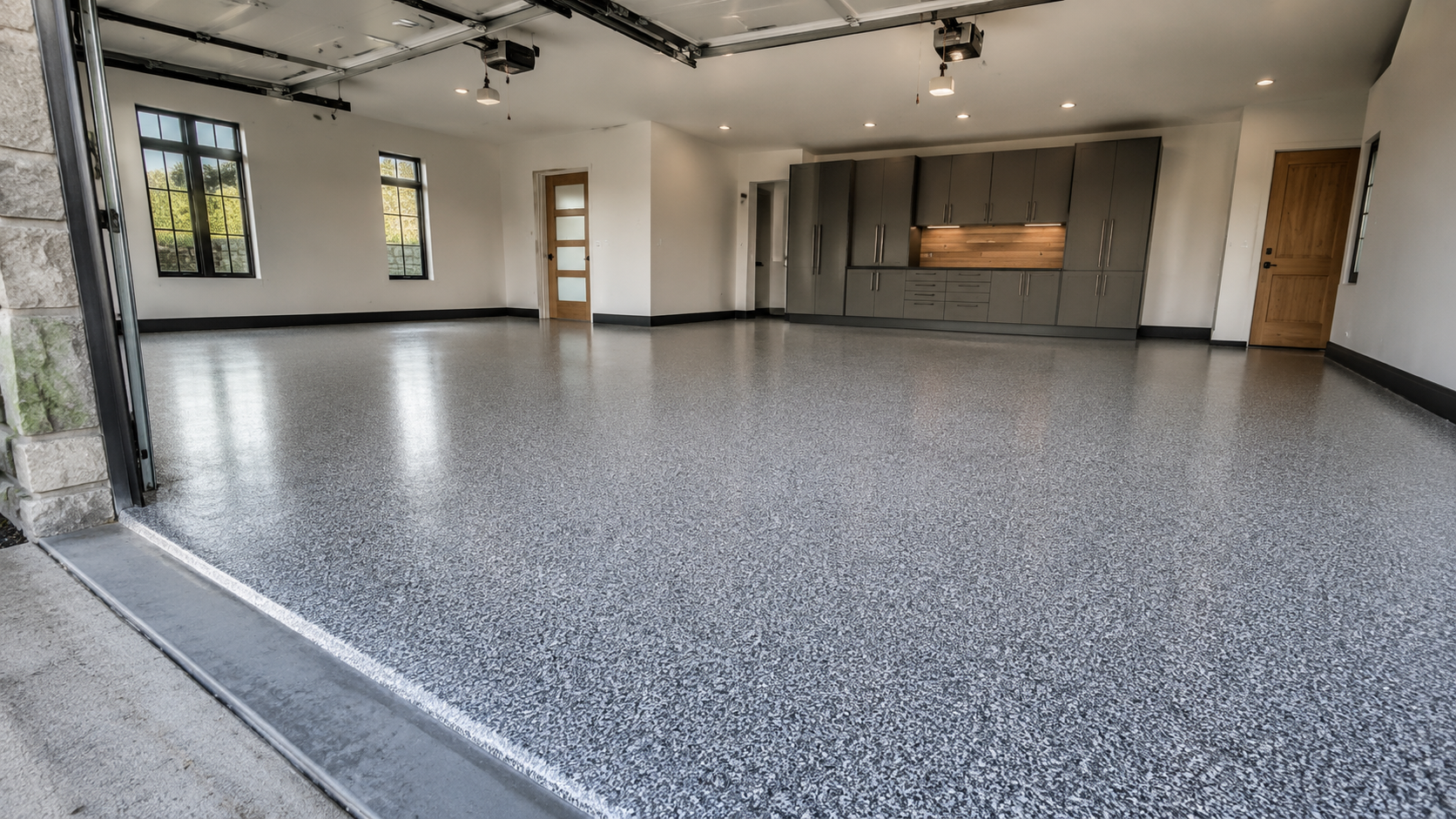
A Brand-New Garage Floor May Not Be Ready for Epoxy
“New” concrete and “ready” concrete aren't the same thing, and that distinction gets lost in a lot of new-build excitement. Manufacturer guidance for conventional epoxy systems generally calls for a minimum of 28 days of cure time before coating — Sherwin-Williams' technical guidance confirms the common 28-day minimum for freshly poured, “green” concrete. But 28 days is a floor, not a guarantee. Whether a specific garage slab is actually ready depends on moisture levels, the curing conditions during that window, and the specifications of the coating system being used. A slab poured during a humid Alabama summer doesn't cure the same way as one poured in a dry fall, even if both hit the 28-day mark on the calendar.
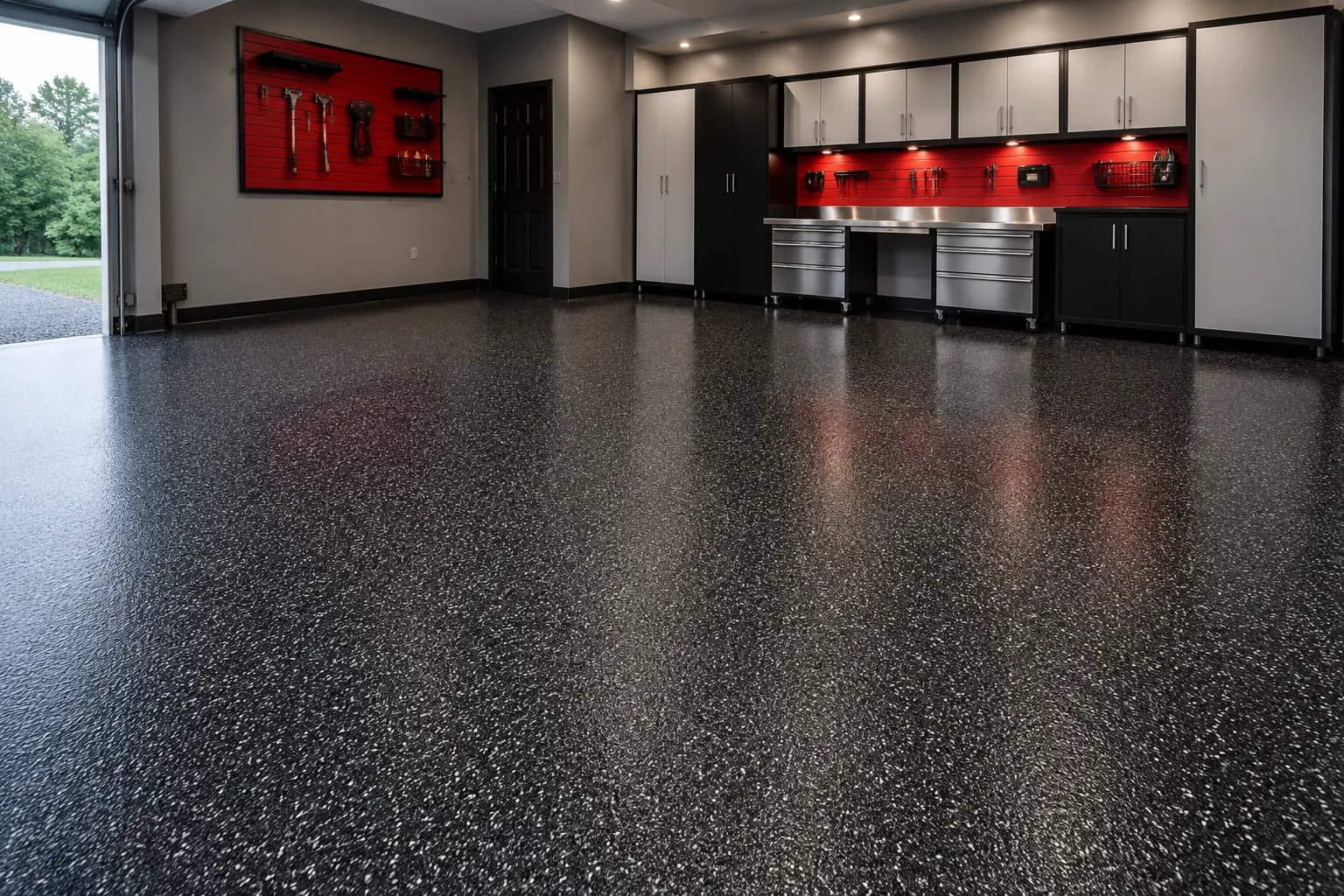
Why Waiting 28 Days Is Not the Only Test
Calendar days alone don't tell the whole story. A few other factors determine whether a new garage slab is actually ready for coating:
- Moisture remaining inside the slab — concrete can look and feel dry on the surface while still holding significant moisture underneath, one of the most common causes of epoxy failure (bubbling, delamination, peeling)
- Curing compounds or sealers that interfere with adhesion — builders often apply a curing compound to control moisture loss, but many create a barrier that prevents epoxy from bonding unless identified and removed
- Excessively smooth concrete — a heavily troweled, polished slab gives epoxy very little to grip, raising the risk of the coating lifting later
- Control joints and early shrinkage cracks — new slabs continue to move and settle in their first months and must be accounted for in the coating plan, not coated over and ignored
- Product-specific requirements — every system (standard epoxy, polyaspartic, hybrid) has its own manufacturer specs for moisture, surface profile, and application conditions; “28 days” is a starting point, not a substitute
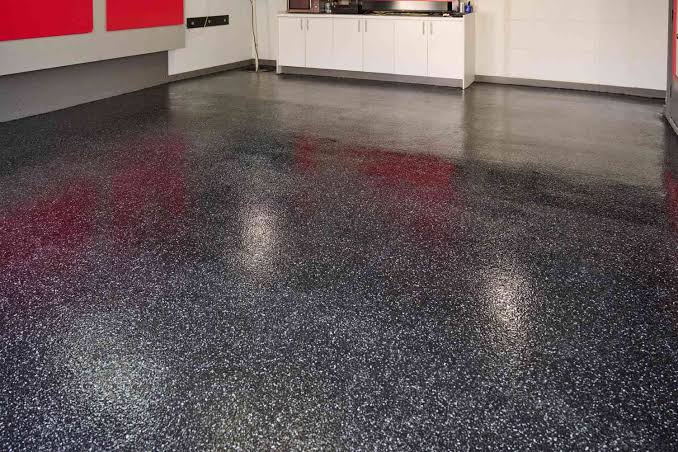
The New-Garage Coating Checklist
Before coating a recently poured Huntsville garage floor, a contractor should:
- Confirm the concrete placement date
- Identify any curing compound or sealer that was applied
- Inspect the slab for cracks, laitance, and surface defects
- Test moisture when conditions or product specifications require it
- Mechanically prepare the surface
- Select epoxy, polyaspartic, or a hybrid system based on exposure and downtime needs
- Follow the manufacturer's cure and return-to-service instructions
Should the Builder Coat the Floor, or Should the Homeowner Wait?
Some builders offer a basic sealer or coating as part of the build. It's worth treating that as a separate decision from the long-term flooring choice. Coating a garage floor is its own specialized installation — it depends on that specific slab's age, moisture condition, and surface, not on a standard timeline applied to every house in a subdivision. A coating contractor needs to actually inspect and prepare the slab in front of them rather than assuming every new garage in a Huntsville development is identical, even within the same neighborhood or from the same builder.
Get the Garage Evaluated Before Choosing a System
Buying or building a new home in Huntsville? Before covering the garage slab, have its age, condition, and moisture risk evaluated. Call 256-380-4615 or request a free garage floor coating estimate.